Certificate Of Encumbrance On Property 2026 Guide | Check Encumbrance-Free Property
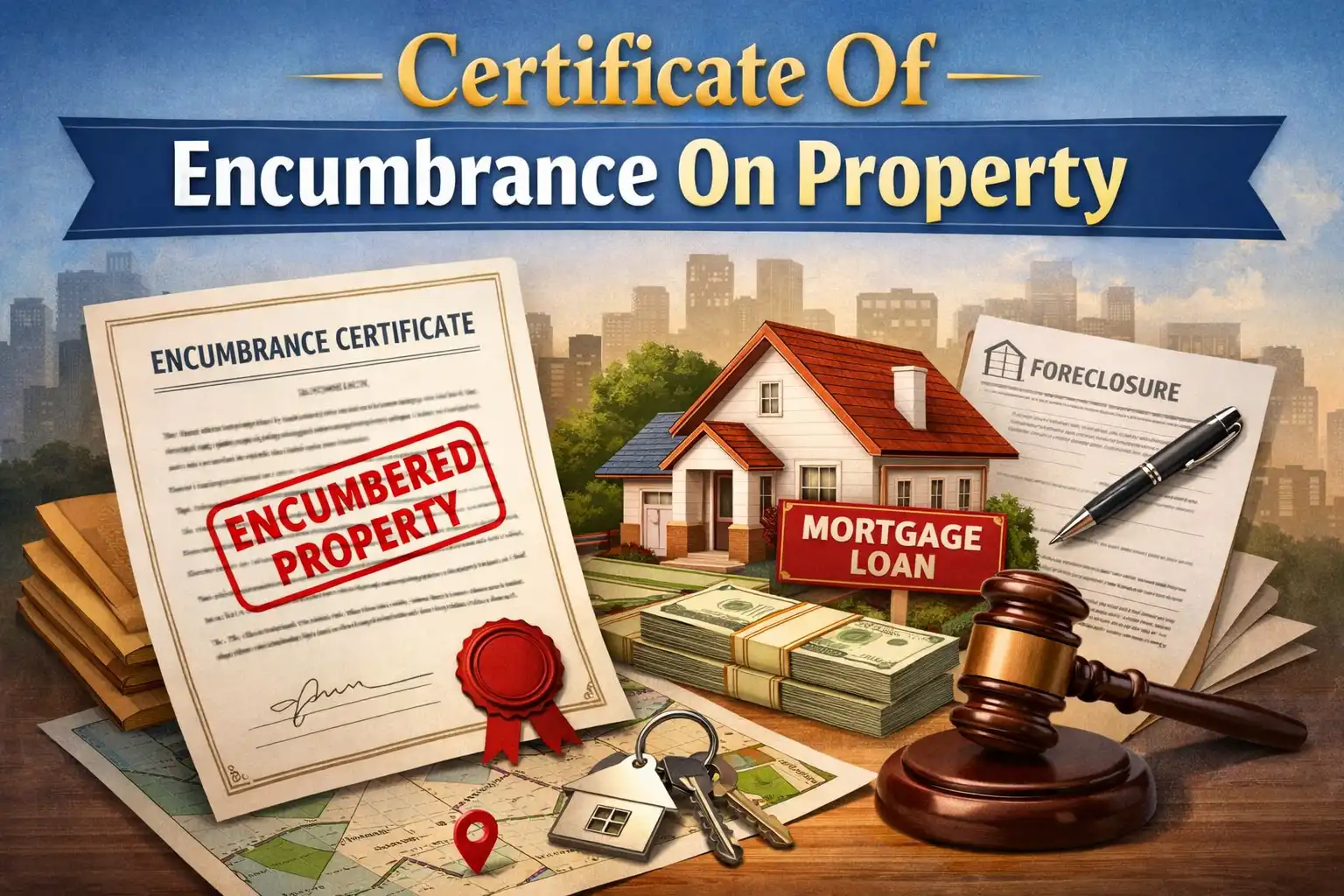
A Certificate of Encumbrance on Property is a legal document issued by the land or municipal registration office that confirms whether a property is free from encumbrances. Encumbrances refer to any legal or financial liabilities that may affect the ownership or transferability of a property. These could include mortgages, liens, unpaid taxes, court disputes, or lease agreements.
Why Certificate Of Encumbrance Matters in 2026
The real estate sector in 2026 is shaped by higher property prices, stricter compliance regulations, and advanced digital records. Skipping the CoE can expose investors to:
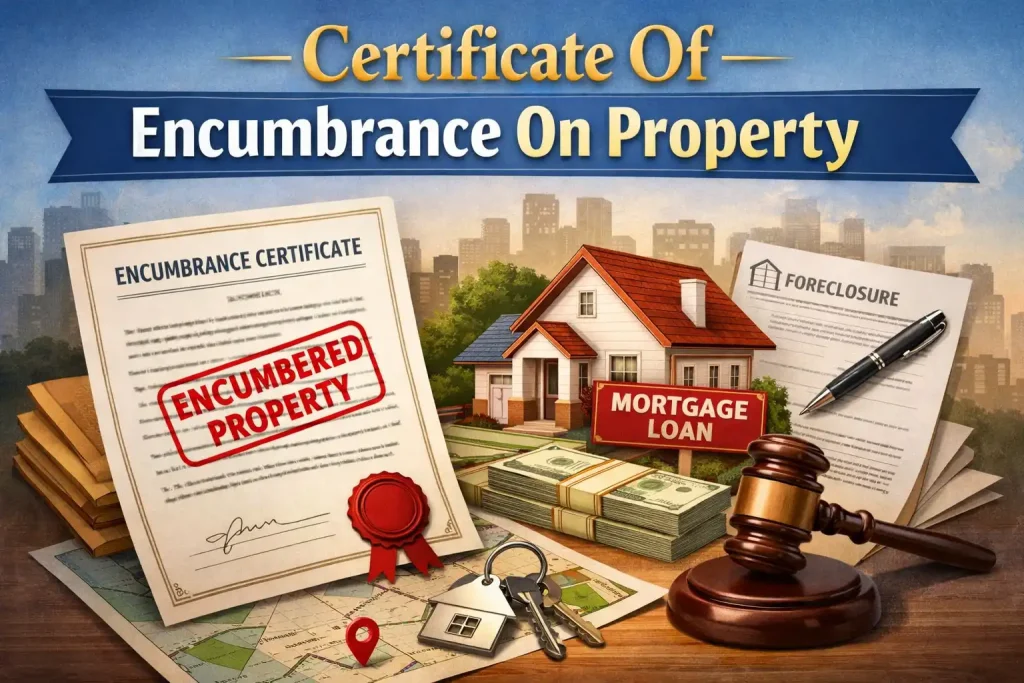
- Hidden liabilities: Unknown mortgages or liens can result in financial loss.
- Legal disputes: Ownership conflicts may arise if prior claims exist.
- Loan rejections: Banks and financial institutions require a clean CoE before approving home loans.
- Delayed transactions: Undiscovered encumbrances can stall property transfer processes for months.
By securing a CoE, buyers gain peace of mind and actionable proof that the property is clear of past obligations, making it easier to secure financing and complete transactions swiftly.
Understanding Encumbrances: Types You Must Know
Encumbrances are not all the same. In 2026, buyers and sellers should be aware of the most common types:
- Mortgage or Charge: When a property is used as security for a loan.
- Lease or Tenancy: Existing rental agreements may restrict ownership rights.
- Legal Claims or Litigation: Pending court cases or ownership disputes.
- Government Liens or Taxes: Unpaid property taxes or municipal dues.
- Easements: Rights granted to third parties, such as utility access, that limit full property use.
A Certificate of Encumbrance clearly lists these, enabling buyers to make informed decisions and avoid disputes.
How To Obtain a Certificate Of Encumbrance in 2026
Securing a CoE in 2026 has become more streamlined, thanks to digital land records in most urban areas. The process typically involves the following steps:
- Identify the Jurisdiction: Determine the local municipal or land registry office responsible for the property.
- Submit Application: Provide property details such as survey number, property ID, or address.
- Provide Owner Identification: Include identification documents of the property owner or applicant.
- Pay Applicable Fees: Fees vary depending on city or district, usually ranging from $5–$50.
- Processing Time: With e-governance adoption, many CoEs are now issued digitally within 3–10 working days.
Some advanced jurisdictions now offer online CoE verification portals, where buyers and banks can directly check encumbrance history without physically visiting offices.
Key Information Contained in a Certificate Of Encumbrance
A CoE is a comprehensive record of a property’s legal and financial status. Typical details include:
| Detail | Description |
|---|---|
| Property Identification | Survey number, plot number, or municipal property ID |
| Owner Information | Name(s) of current legal owner(s) |
| Encumbrance List | Mortgages, liens, easements, or legal disputes |
| Transaction History | Chronological record of prior sales and transfers |
| Registration Period | Start and end dates of recorded encumbrances |
| Authority Verification | Signature or digital seal of the registering authority |
This structured data provides a transparent history, crucial for lenders and prospective buyers.
Benefits of a Certificate Of Encumbrance for Buyers and Investors
Obtaining a CoE in 2026 comes with several practical benefits:
- Risk Mitigation: Buyers can avoid properties with hidden financial or legal liabilities.
- Loan Approval Facilitation: Banks often mandate a CoE before granting home or commercial property loans.
- Smooth Transfer of Ownership: Encumbrance-free properties speed up registration processes.
- Enhanced Negotiation Power: Knowledge of encumbrances allows for better bargaining or legal safeguards.
- Future Security: A clear CoE ensures the property remains a safe long-term investment.
Investors increasingly consider CoE as an essential step in due diligence, especially for high-value or commercial real estate purchases.
Common Misconceptions About Certificate Of Encumbrance
Despite its importance, many buyers still misunderstand the CoE:
- CoE is not an Ownership Proof: It confirms encumbrances, but ownership is verified via sale deed or title deed.
- Not a One-Time Requirement: A CoE should be checked before each transaction, especially in properties with frequent ownership changes.
- Does Not Guarantee Future Encumbrances: It reflects the past and present; future claims may still arise.
- Online CoE Access May Vary: Not all regions offer comprehensive digital records; physical verification may be necessary.
Being aware of these nuances prevents over-reliance and ensures informed decision-making.
Certificate Of Encumbrance in Real Estate Transactions
A typical property transaction process in 2026 includes CoE verification at multiple stages:
- Pre-Purchase Evaluation: Buyers request a CoE to ensure the property is free from liabilities.
- Loan Sanction Process: Banks or financial institutions validate the CoE before disbursing funds.
- Sale Deed Registration: The CoE is presented to registration authorities to confirm encumbrance-free transfer.
- Resale or Investment: Future buyers and investors may request a fresh CoE for due diligence.
Skipping this step can result in delayed registrations, litigation, or even loss of investment.
Cost and Timeline for Certificate Of Encumbrance
The cost and processing time of CoE vary depending on location, digital infrastructure, and property type:
| Parameter | Typical Range in 2026 |
|---|---|
| Application Fee | $5–$50 (residential) / $20–$100 (commercial) |
| Processing Time | 3–10 working days (digital) / 10–30 days (manual) |
| Validity | Usually 6 months; renewed CoE recommended for fresh transactions |
| Mode | Online portal or physical office submission |
Advanced cities with fully digitized land records offer instant downloads of CoE, reducing dependency on paper-based processes.
Tips for Using a Certificate Of Encumbrance Effectively
To maximize the benefits of a CoE:
- Always verify all historical encumbrances, not just recent ones.
- Cross-check CoE details with the title deed and municipal tax records.
- Retain multiple copies—digital and physical—for future reference.
- Seek legal consultation if any encumbrances appear unclear or disputed.
- Request updated CoE before resale or mortgage to ensure continuity.
These practices ensure that your property investment is protected and legally sound.
In 2026, the Certificate of Encumbrance on Property is more than a bureaucratic formality; it is a critical tool for transparency, security, and informed decision-making in real estate. Whether you are a first-time buyer, seasoned investor, or financial institution, obtaining and understanding a CoE safeguards you against legal disputes, hidden liabilities, and financial setbacks. By integrating this document into every property transaction, you ensure that your investments remain secure, compliant, and future-ready.
FAQ’s
Q1. Can a Certificate of Encumbrance be used as proof of ownership?
A1. No, it only confirms whether a property has any financial or legal liabilities. Ownership is verified via the title deed or sale deed.
Q2. How long is a CoE valid in 2026?
A2. Typically, a CoE is valid for 6 months. For major transactions, an updated certificate is recommended.
Q3. Can I obtain a CoE online?
A3. Yes, most urban jurisdictions now provide digital access to CoEs, though rural areas may require physical submission.
Q4. Does a CoE guarantee the property will remain encumbrance-free in the future?
A4. No, it only covers past and current records. Future claims or liens may arise, so continuous due diligence is advised.
Q5. What documents are required to apply for a CoE?
A5. You typically need the property ID, survey number, ownership proof, and applicant identification. Fees may vary.
Q6. Can lenders reject a loan without a CoE?
A6. Yes, banks and financial institutions often mandate a clean CoE before approving home or commercial property loans.