Tamilnadu Government Pongal Gift 2026
Chief Minister M.K. Stalin formally inaugurated the Tamilnadu Government Pongal Gift Scheme at a fair price shop in Alandur, Chennai. This event set in motion one of the largest festive welfare distributions in the state’s recent history. Designed primarily for rice ration cardholders and select other eligible groups, the scheme blends cultural celebration with practical socio‑economic support.
This year’s initiative also carries political resonance. With Tamil Nadu’s assembly elections approaching in 2026, welfare programs like these shape public discourse and voter expectations. While some applaud the government for thoughtful support, others criticise its timing or scale as election‑oriented.
What the Tamilnadu Government Pongal Gift 2026 Includes
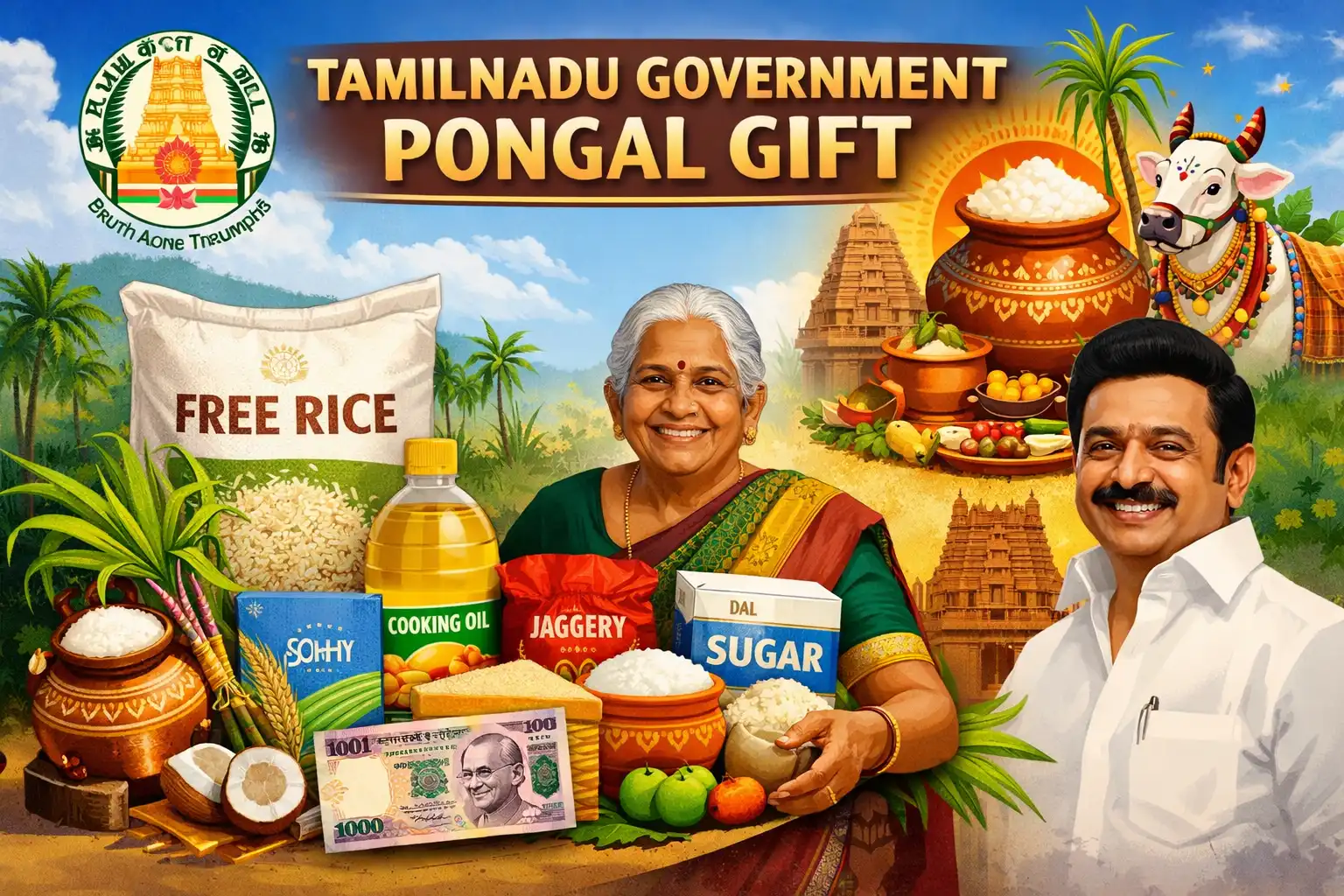
The gift package for 2026 is a carefully curated mix of cash and traditional items that matter most during Pongal celebrations. Designed to offset inflation and festival expenses, these benefits help families buy essentials and uphold festive customs with dignity.
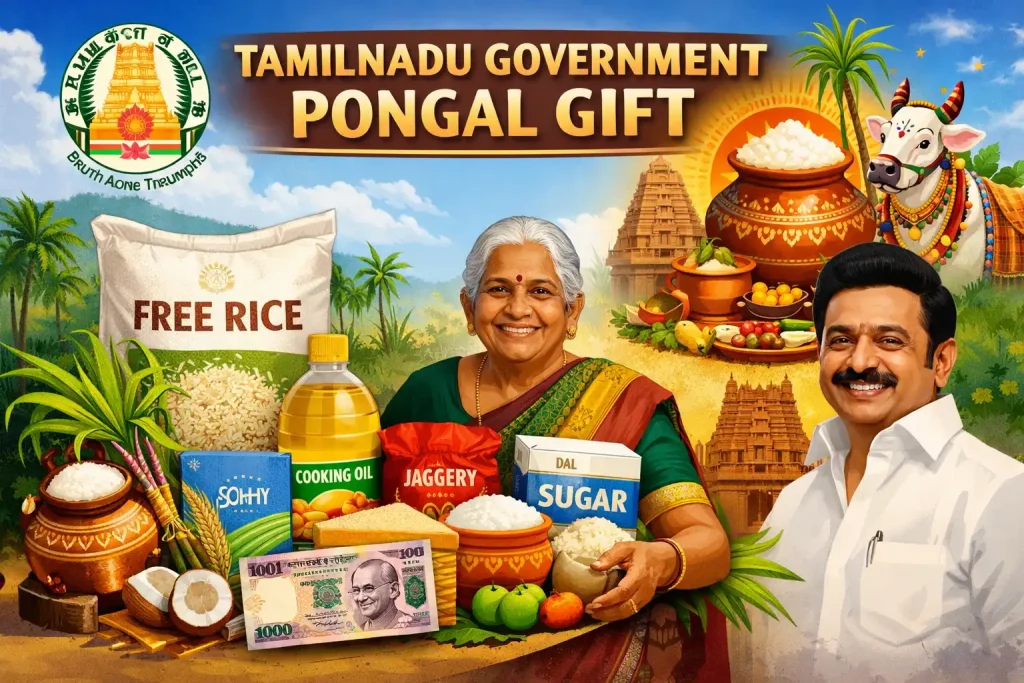
Highlights of the 2026 Pongal Gift Benefits
Cash & Essentials Provided:
- ₹3,000 in cash assistance per eligible household
- 1 kg Raw Rice
- 1 kg Sugar
- 1 Full‑length Sugarcane
- Dhoti and Saree (traditional attire)
These benefits are intended to be collected at designated fair price shops (ration shops) across Tamil Nadu, ensuring accessibility and familiarity for beneficiaries. Distribution typically runs for a fixed period leading up to Pongal, and beneficiaries receive tokens indicating when to collect their gifts to avoid overcrowding.
Who Qualifies? Eligibility and Priority
Not every resident automatically receives the Pongal Gift. The scheme focuses on socio‑economically sensitive groups, aiming to provide support to families most likely affected by rising costs.
Primary Eligibility Criteria
- Rice Ration Card Holders: Families holding a valid rice category ration card are the core beneficiaries.
- Sri Lankan Tamil Refugees in Camps: Residing in government‑registered rehabilitation camps within Tamil Nadu.
Historically, sugar‑only cardholders or no‑commodity cardholders do not qualify for the full set of benefits, although distribution policies can vary slightly across districts and phases of implementation.
Distribution Logistics: How the Scheme Reaches People
To ensure smooth rollout and minimise crowding at fair price shops, the government implemented a structured distribution process. Local officials and ration shop workers are central to this plan.
Token System and Timeline
- Tokens specifying date and time of collection are distributed to households prior to main distribution.
- Distribution typically occurs from January 8 to January 12/13, 2026, leading up to the Pongal festival proper.
- Beneficiaries present their tokens and ration card at the fair price shop to collect the gift items and cash.
This phased rollout helps reduce long queues, enhances organisation during peak hours, and brings clarity to recipients about when to visit their designated shops.
Ground‑Level Organisation
Local district administrations worked closely with fair price shops to coordinate logistics and staffing. In some areas, hundreds of ration shop employees were mobilised to manage token distribution and item handover efficiently.
Financial Scale: Government Expenditure on Pongal Gifts
The Pongal Gift Scheme in 2026 represents a significant budgetary commitment by the Tamilnadu Government, reflecting both economic support and investment in community welfare.
Key Financial Numbers (2026 Overview)
- Total Estimated Expenditure: ₹7,604.29 crore
- Targeted Households: Approx. 2.22 crore rice ration cardholders and eligible families
- Fund Allocation: Includes cash assistance, food items, and traditional clothing distribution
This level of investment underscores the government’s intent to combine festive celebration with economic relief, particularly at a time when households face inflation and rising commodity prices.
Impact on Households and Communities
For many families, the Pongal Gift Scheme 2026 was more than just a government handout. It served as an economic buffer that helped reduce festive expenditures, making traditional celebrations more vibrant and inclusive.
- Reduced Financial Stress: Cash assistance boosted purchasing power during peak festival spending.
- Cultural Support: Essential items like sugarcane and clothing upheld cultural norms and rituals central to Pongal.
- Community Engagement: Local fair price shops became hubs of celebration and social interaction as beneficiaries collected gifts.
By blending tradition with practical support, the scheme helped bridge festive joy with economic pragmatism.
Frequently Asked Questions
Who is eligible for the Pongal Gift?
Primarily rice ration cardholders in Tamil Nadu and Sri Lankan Tamil refugees in rehabilitation camps.
How do beneficiaries receive their gifts?
Through fair price shops, where tokens distributed prior to the festival guide beneficiaries on when to collect their gifts and cash.
Why is the scheme significant in 2026?
In addition to festival support, the scheme represents a major welfare investment ahead of state elections and provides relief amid inflation.
Is the ₹3,000 amount fixed or could it change?
In 2026, ₹3,000 is the cash component. There have been debates and political calls to increase this amount, but no official increase has been implemented yet.
The Tamilnadu Government Pongal Gift 2026 stands as one of the most talked-about welfare initiatives for this year’s harvest festival. By combining financial assistance with culturally relevant items, it not only supports households but also reinforces the value of community and tradition. Whether viewed as economic relief, political strategy, or festive support, the scheme’s breadth and impact make it a defining feature of Pongal 2026 in Tamil Nadu.