Clat Exam Date 2026 Registration Last Date
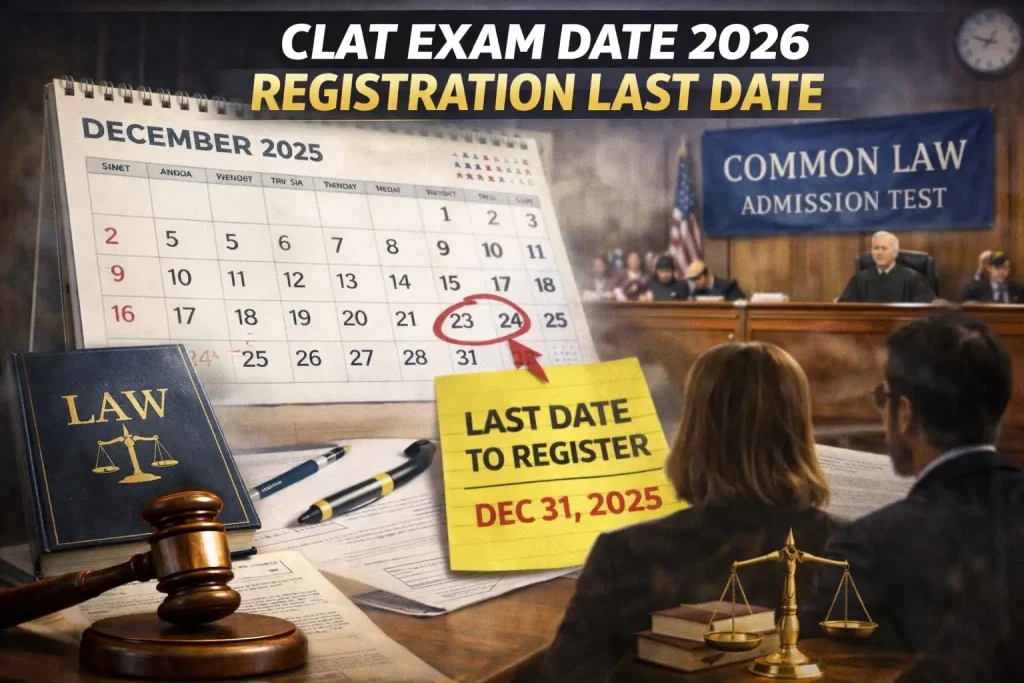
Instead of a simple list of dates, it’s crucial to contextualize what these deadlines mean for your law school journey. In 2026, the Consortium of National Law Universities (CNLU), the body that administers CLAT, originally set the registration closure as October 31 but extended the last date to November 7, 2026. This gave aspiring law students crucial extra time to submit their applications, complete documentation, pay fees, and ensure eligibility without the pressure of a prematurely closing window.
Clat Exam Date 2026 Registration Last Date
Here’s how the year‑long CLAT 2026 application journey unfolded:
| Event | Date |
|---|---|
| Official CLAT 2026 Notification Release | July 20, 2026 |
| CLAT 2026 Registration Opens | August 1, 2026 |
| CLAT 2026 Registration Last Date (Extended) | November 7, 2026 |
| Application Fee Payment Deadline | November 7–9, 2026 (approx.) |
| Admit Card Release | Late November 2026 |
| CLAT 2026 Exam | December 7, 2026 |
| Result & Counselling Begins | Mid‑December 2026 |
| Counselling Window | December 2026 |
This extension wasn’t just administrative formality — it directly influenced thousands of aspirants, allowing extra time to gather academic documents, resolve technical issues, and make thoughtful choices about preferred NLUs.
Why the Registration Dates Matter More Than You Think
Come 2026, the impact of missing the registration deadline starts to show sharply in both preparation strategy and career planning. Let’s walk through the key reasons why the registration last date is a critical pivot point in your law entrance journey:
1. Gateway to Top Law Schools
CLAT scores determine admission into the 26+ national law universities across India for both undergraduate (5‑year BA LLB) and postgraduate (LLM) programs. Since these institutions often top national rankings and attract recruiters from leading law firms, timely registration is your first step into an elite legal career.
2. Eligibility and Competition Deadlines
Failing to submit a form by the extended deadline doesn’t just delay your exam, it resets your entire academic cycle. You’d lose a year of study and preparation momentum, which, in competitive contexts, can dramatically affect your performance readiness for the next cycle.
3. Structured Preparation Window
With the application window closed by November 7, candidates could focus exclusively on refining their preparation for the December 7, 2026 exam, including mock tests, sectional revisions, and time‑management strategies. This structured timeline boosts confidence and clarity as exam day approached.
How the CLAT Registration Process Works
Let’s demystify the registration steps so you know exactly what to expect and what mistakes to avoid:
Step‑by‑Step Registration Journey
- Begin With Official Notification: Watch for the annual CLAT notification on the official consortium portal, this alerts you to “Go Live” dates.
- Prepare Required Documents: Gather proof of identity, academic marksheets (10th & 12th), category certificates (if applicable), passport‑size photograph, and signature scans.
- Fill Online Application: Enter personal details, academic history, preferences for test centres, and upload documents.
- Pay Application Fees: The fee varies by category, and sometimes includes optional items like previous years’ papers.
- Review, Submit, and Download Confirmation: Double‑check all entries before final submission to avoid errors.
This procedural clarity directly affects your eligibility and helps avoid common errors like rejected forms or missing uploads, mistakes that many aspirants regret when deadlines loom.
CLAT 2026 Exam Day: What You Must Know
Registration is just step one, success in CLAT also depends on how well you transition into exam‑focused preparation. Here’s a snapshot of what the December 7, 2026 exam looked like:
- Date & Time: December 7, 2026, from 2:00 PM to 4:00 PM.
- Mode: Offline (pen‑and‑paper) test across designated test centres nation‑wide.
- Sections Covered: English, Legal Reasoning, Logical Reasoning, Mathematics, and Current Affairs (including General Knowledge).
- Scoring & Pattern: Each section carries equal weight, and questions are aimed at assessing comprehension, analytical ability, and legal aptitude.
The central point here isn’t just memorizing dates, it’s understanding that registration fuels your preparation roadmap: once you’re registered, you can legally book mock tests, join study groups, and plan admission strategies.
The CLAT 2026 registration deadline, extended to November 7, 2026, marked a defining moment for law aspirants across India. It wasn’t merely a date on a calendar; it was the threshold to opportunity, competition, and a future in law. Whether your aim is to join a top NLU, pursue litigation, or enter public policy, registering in time shaped every next step: preparation timelines, exam readiness, counselling opportunities, and eventual academic placement.